Glenn Martens is leaving
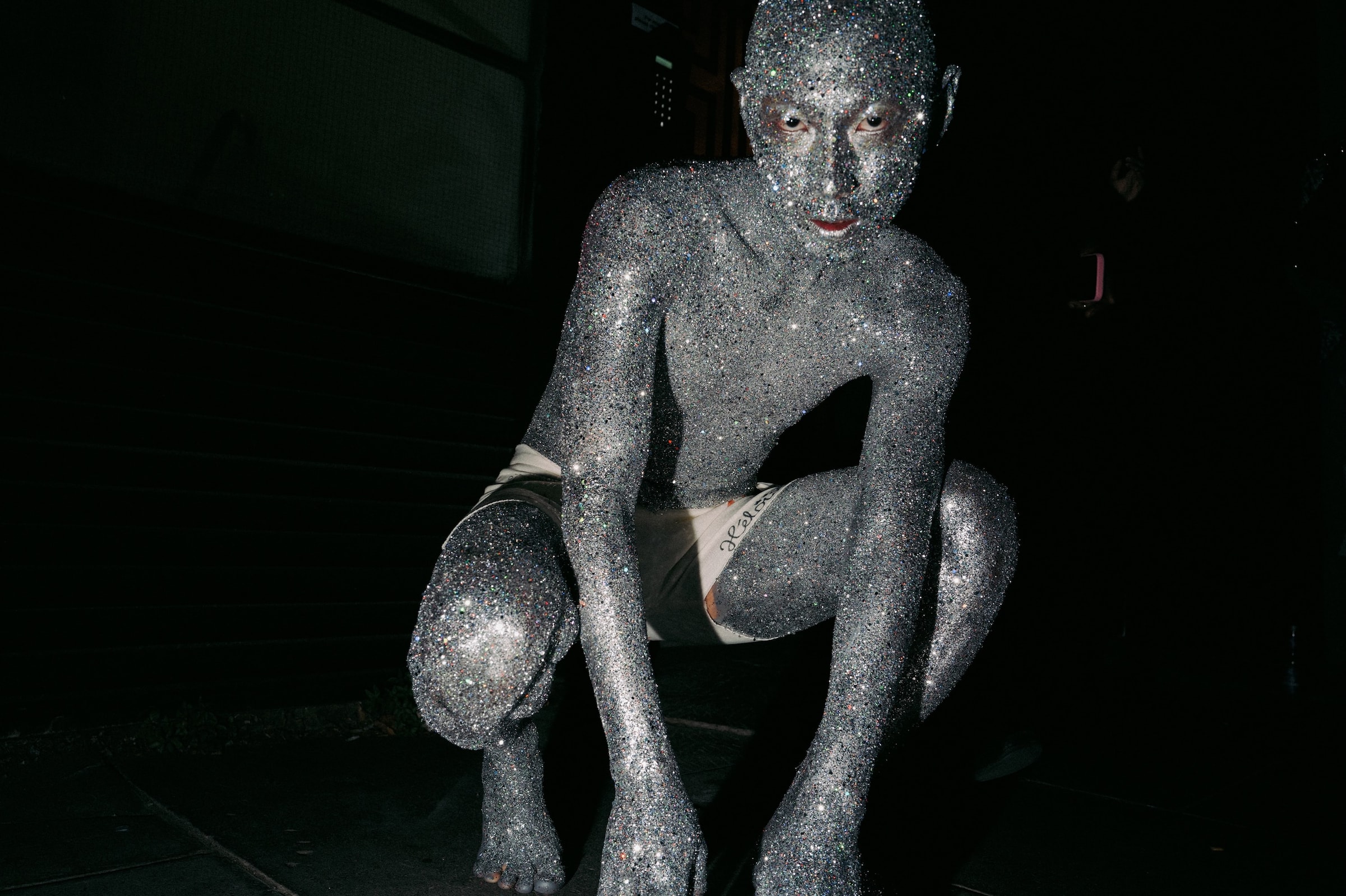
Diesel, and he made sure absolutely nobody in that room forgot it. The show opened inside a custom-built club space, all industrial metal railings and a red light thick enough to feel on your skin. Within minutes, the crowd realised something was deeply, delightfully off: the people sweating next to them weren't just guests. Marseille-based dance collective (La)Horde had planted 200 performers throughout the audience, who spent the next twenty minutes making out, groping, headbanging, and finger-sucking. Clutch your pearls, or better yet, join in.
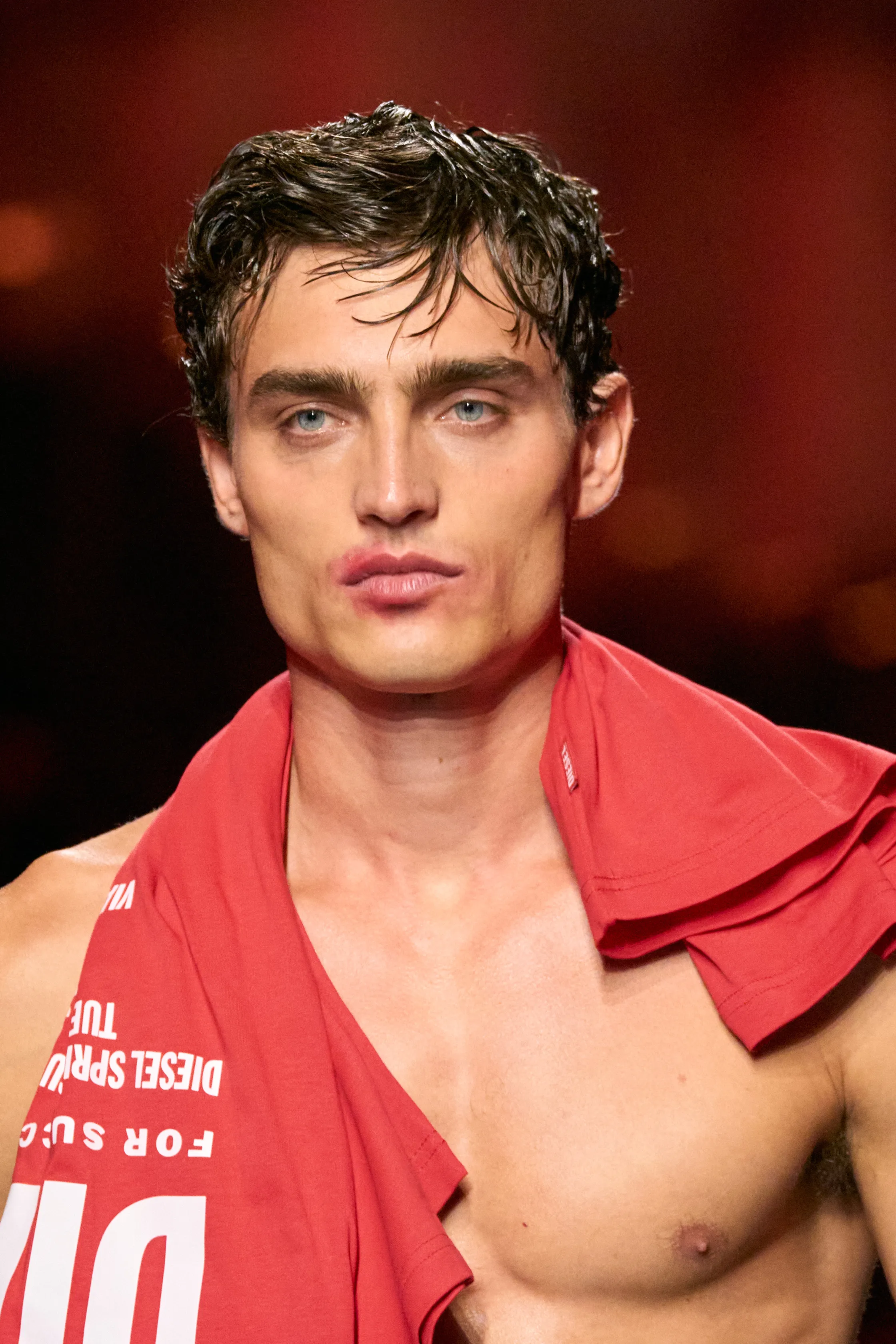
The clothes carried the exact same chaotic logic. Martens has always understood that more is more, but here the brief was clearly: if you can't choose what to wear, wear everything at once. A waxed leather jacket sat over a topstitched blazer, which sat over a ribbed jumper fused straight into a tracksuit collar. Layers stacked until the eye completely lost track of where one garment stopped and the next began. Denim was coated and laser-treated until it passed for leather, while trompe l'oeil prints dragged winter coats onto spring shirts — tweed and shearling rendered in fabric that had never seen a sheep. One print even directly reproduced the raw-edged shearling coat from Martens' very first Diesel show, a nostalgic nod to where all this beautiful madness started. Trousers and skirts opened at the waist into a low-rise cut that looked almost architecturally impossible, finished off with orchid embroidery creeping up from the hem. One top stayed up purely on the strength of a belt, echoing the very first look Martens ever sent down a Diesel runway.
Accessories got the same beautifully ironic treatment. The D-One bag returned in a run of new textures, its straps rigged with buckles running the length of the body, alongside a set of new charms shaped like everyday objects rendered in leather: a sock turned into a pouch, a newspaper folded into a clutch. The brand-new Lock-D arrived soft and deliberately unfinished-looking, held shut by the Double D clasp that started life in Diesel's jewellery line before working its way into everything else.
The party peaked when (La)Horde's performers suddenly dropped into synchronised headbanging, possessed by a reworked version of Donna Summer's Love to Love You Baby, a song Time magazine once calculated contains 22 audible orgasms, which felt about right for the room. It was unhinged in exactly the way Martens' Diesel always is: sexy, a little bit stupid, and completely unbothered by anyone who wasn't into it.
"The party always comes first at Diesel," Martens said afterward. "It’s about inclusivity, self-expression, pleasure and the democracy of experience. The collection is the essence of Diesel: disruptive, sexy, fluid, fun. We are all in this together: let’s take a ride one more time."