beabadoobee’s Pylon Review: A Love Letter to Transformation
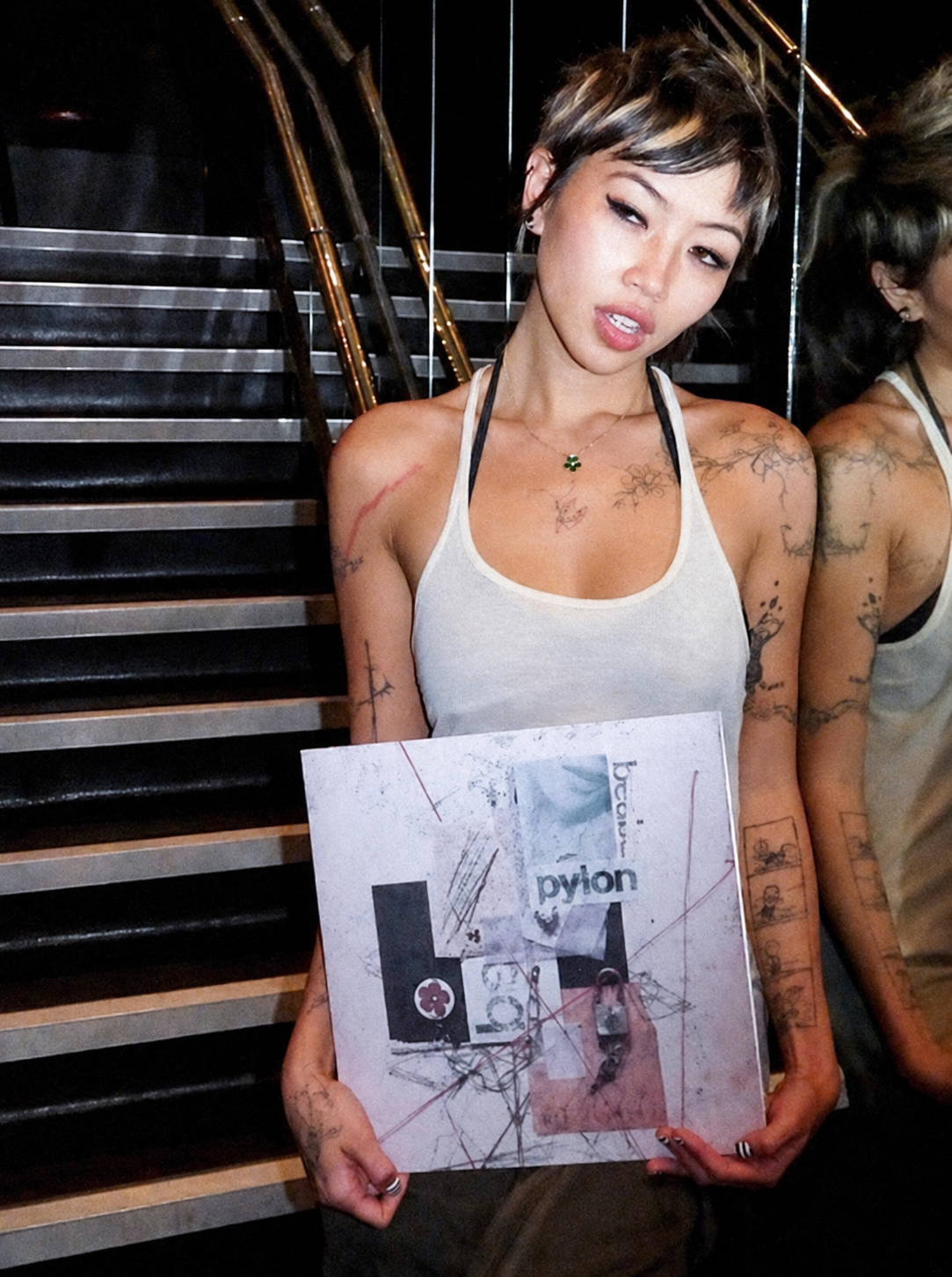
On Pylon, beabadoobee brings the intimacy of her early work into a heavier sound, tracing the pull between nostalgia and change.
B
eabadoobee’s highly anticipated fourth album, Pylon, sounds a lot like nostalgia - and newness. Somewhere between the gentle lyricism of her early EPs (Patched Up (2018), Love Worm (2019)) and the rockishness of her first album Fake It Flowers (2020) sits Pylon.
In some ways, the album feels like a recall to the beginning of her stardom. With a plethora of emotional reflections, the tracks on Pylon are vulnerable, revealing and laced with an emotional quality that was so inherent to her early songs.
With several hints from beabadoobee herself before the album’s release, fans expected an emotional portrait that looked something like inner conflict, nostalgia, love and separation all in one. At her Spotify Hometown Show at Bush Hall in Uxbridge, she became visibly emotional when discussing Pylon, admitting that while she wanted to share something so personal with her audience, part of her also wanted to keep it to herself.
Fans had also been expecting a grungier, rockier sound from Pylon, and in many ways, that’s exactly what beabadoobee delivered. With heavy bass guitar, drumming and almost poetic electric guitar riffs, the lyrics and sound make for the perfect pair. The album’s star-studded collaborations also reinforce this sound, bringing together the likes of Paramore’s Hayley Williams, Chino Moreno of Deftones, The 1975’s Matty Healy, Shane Moran of Title Fight, and more.
These collaborations seem to reflect the scale of beabadoobee’s artistic world now, conveying just how far she’s travelled since her early releases. With a career beginning with bedroom indie pop, she’s now developed a sound that’s capable of working alongside big names in alternative music.
And yet, Pylon doesn’t leave those earlier traces behind. Its heavier sound nods to the 90s alt rock of Fake It Flowers, but it’s underscored by a certain kind of deliberateness. Now, it feels like she’s found where she wants to sit musically.
The soundscape of the album itself reflects transformation. Much like the pylons inspiring its creation, the tracks straddle two places at once.
They’re full of sonic connections and disconnections. The opening title track, ‘Pylon’, foregrounds the tension between the album’s simultaneous softness and harshness. With a gentle acoustic sound, listeners are lulled into a sense of intimacy as Bea muses that she’d rather be ‘nowhere with you than somewhere without you’. However, the jagged edges of the electric guitar begin to crescendo. By the middle, we’re launched into a rockish moment that feels like the album distilled into one sound.
This tension between unexpected sounds comes back around with the closing track, ‘Satellite’. Once again, the acoustic, almost Midwest emo opening is rooted in delicate vocals that later explode into clashing sounds of alternative rock, with backing vocals from Deftones’ Chino Moreno.
The contrast between the raw, abrupt and rockish and the soft and emotionally weighted is just as apparent across individual tracks. ‘Nothing to Prove’, featuring Hayley Williams, is brazen and unapologetic, speaking directly to self-assurance. In contrast, ‘Spark’ carries a softer emotional weight, showing a gentler side of beabadoobee’s songwriting. Together, the tracks demonstrate the range within Pylon, with each sitting at a different point between its softer and harsher extremes.
And then, there are those tracks that fall somewhere in between. A hazy mixture of love and longing, but also the pain of feeling far away. ‘Estranged’ sounds similarly hopeful and despondent, with its quiet opening soon replaced by catchy guitar riffs and a grungy sound. The song continues to tiptoe the line between soft vocals and growing angst until the very end.
‘Memories’ is another standout track on the album, pre-released as a single back in August 2026. As its title suggests, nostalgia sits at its heart. It captures the album’s wider push and pull between holding onto the past and moving forward, feeling like a fitting reflection of beabadoobee’s own growth.
With this constant tug of war between the familiar and the changing, Pylon feels like an album caught between two versions of beabadoobee: the artist she was and the one she’s becoming. But rather than choosing between the two, she brings them together. The vulnerability and intimacy of her earliest work remain, now layered with heavier sounds and a growing sense of where she wants to be.